The Red Deer Freeze-Thaw: Why Standard Concrete Fails
Your Red Deer Concrete Contractor
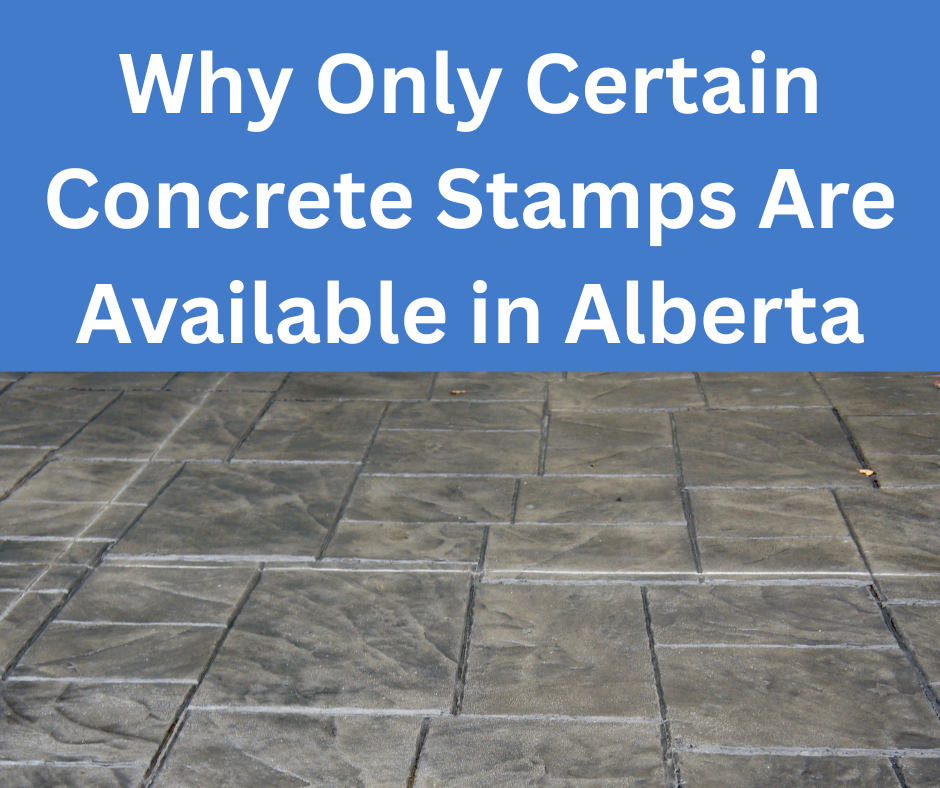
A beautiful backyard patio is the crown jewel of outdoor living. It provides a perfect gathering space for summer barbecues and quiet evening fires. Many homeowners dream of installing beautiful stamped concrete in Red Deer to elevate their property's aesthetic and increase its value.
But there is a harsh "Red Deer Reality" that quickly shatters that dream. Take a drive through neighborhoods like Clearview Ridge or Anders Park after a long winter, and you will see the damage firsthand. Gorgeous patios and driveways are often marred by ugly, jagged cracks and aggressively shifting slabs.
Standard installation methods simply cannot survive the local environment. Central Alberta presents a unique combination of aggressive soil conditions and wild temperature swings that destroy basic concrete pours in a matter of months. Homeowners who try to save a few dollars on the foundation often find themselves searching for concrete crack repair in Red Deer by the following spring.
To protect your investment, you need to understand exactly what destroys concrete in Central Alberta—and how modern engineering standards can stop it.
The Villain Beneath the Surface: Central Alberta’s High-Clay Soil
The biggest threat to your patio does not come from above. It comes from the ground below. Building reliable concrete foundations requires a deep understanding of the local soil composition.
Why "Expansive" Clay is a Nightmare for Homeowners
Central Alberta sits on massive deposits of "glaciolacustrine" clay, which was left behind by ancient glacial lakes. This specific type of clay is highly expansive. When it rains, the clay absorbs water like a sponge and expands dramatically. During the dry summer weeks, it loses that moisture and shrinks back down.
This creates a literal moving target for any concrete poured on top of it. A slab that rests directly on clay soil concrete foundations will be constantly pushed upward and pulled downward. Without a specialized buffer, the rigid concrete simply snaps under the stress.
Heave vs. Settling: Understanding the Difference
When evaluating patio damage, contractors look for two distinct types of movement:
- Heave: This occurs when trapped moisture freezes into ice lenses beneath the slab. Water expands by about 9% when it freezes, creating immense upward pressure that physically lifts and cracks the concrete.
- Settling: This happens when the soil beneath the concrete collapses or washes away. The heavy slab loses its support and sinks into the ground, leading to uneven surfaces and pooling water.
Checklist: Is Your Soil Clay or Loam?
Not sure what you are building on? Try the ribbon test. Take a handful of damp soil from your backyard and squeeze it into a ribbon between your thumb and forefinger. If it forms a long, sticky ribbon that holds its shape, you have high-clay soil. If it crumbles and falls apart, you have loam or sandy soil.
The 2026 Climate Data: 40+ Freeze-Thaw Cycles
Red Deer experiences an incredibly volatile winter climate. The 2025/2026 winter season alone showcased record temperature swings driven by warm Chinook winds. Temperatures can easily jump from -30°C to +5°C and back down again within a 48-hour window.
Many people assume the extreme cold is what ruins their stamped concrete. In reality, the cold is entirely harmless. The actual damage is caused by the Red Deer freeze-thaw cycle.
When the temperature rises above freezing, snow melts and water seeps into microscopic pores in the concrete and the soil beneath it. When the temperature plummets the next day, that water freezes and expands. This continuous melting and refreezing creates intense internal hydraulic pressure. Over the course of 40 or more freeze-thaw cycles in a single winter, this pressure literally blows standard concrete apart from the inside out.
Engineering for Longevity: The "Overbuilt" Red Deer Standard
To survive these harsh conditions, your patio requires a heavily engineered approach. Local experts know that cutting corners is a recipe for disaster. As one veteran contractor puts it: "In Red Deer, we don't just pour concrete; we build a foundation that happens to have a finished top."
Why 4-Inches of Gravel Isn't Enough
Standard building practices in milder climates often call for a simple four-inch layer of gravel beneath a concrete slab. In Central Alberta, that is completely insufficient.
A proper concrete sub-base in Central Alberta requires a 10 to 12-inch excavated trench filled with compacted, non-frost susceptible gravel. This deep base creates a critical drainage chimney. It allows water to flow away from the concrete and into the earth before it has a chance to freeze and expand. Sourcing quality aggregate from reputable local suppliers like Burnco or Lafarge ensures the base material meets strict structural standards.
Rebar vs. Wire Mesh: Why We Don't Compromise
When reinforcing the slab, contractors must choose between wire mesh and steel rebar. The debate over rebar vs wire mesh in Alberta is easily settled by looking at failed patios.
Wire mesh comes in rolls and is notoriously difficult to keep in the middle of the slab during the pouring process. It often gets pushed to the very bottom, rendering it structurally useless.
A patio built to last requires a grid of 10mm or 15mm steel rebar. This grid must be elevated on specialized plastic "chairs" to ensure it sits perfectly in the center of the concrete. Steel rebar provides the essential tensile strength required to hold the slab together when the ground inevitably shifts.
Municipal Compliance: Red Deer Bylaws & Drainage
Building a patio is not just an engineering challenge; it is also a legal one. The City of Red Deer enforces Community Standards Bylaw #3383/2007, which strictly regulates surface drainage.
When you install a large, impermeable surface like stamped concrete, you alter how water flows across your property. If your new patio directs rainwater and melting snow into your neighbor's basement, you will be held legally and financially responsible. A professionally engineered patio must include precise grading—typically a minimum 2% slope away from your home's foundation—and intentional drainage pathways to remain fully compliant with municipal bylaws.
Maintenance for the Alberta Climate
Even the best-engineered stamped concrete in Red Deer requires proper seasonal maintenance to survive the winter.
Old-school acrylic sealers simply sit on top of the concrete, forming a film that quickly peels away under snow and ice. The current standard requires siloxane-based penetrating sealers. These modern sealers soak deep into the concrete's pores, creating a breathable, waterproof barrier that prevents moisture from entering and freezing.
You must also follow the strict "No-Salt" rule. Traditional de-icing salts chemically attack the concrete surface, causing pitting and spalling. For winter traction, use local alternatives like pickled sand or gravel chips.
Take the Next Step Toward Your Dream Patio
A stunning outdoor living space is entirely possible in Central Alberta, provided you respect the unique challenges of the local environment. By understanding the impact of expansive clay, accounting for brutal freeze-thaw cycles, and demanding proper engineering standards, you can enjoy a beautiful patio that lasts for decades.
Do not let your backyard become a cautionary tale. If you are ready to upgrade your outdoor space with concrete that is actually built to survive Red Deer winters, reach out to a specialized local contractor for a site assessment and a custom foundation plan.
Can I pour concrete in Red Deer during the winter?
Yes, but it requires highly specialized equipment. The ground must be thawed using ground heaters, and the entire pour area must be "hoarded" (enclosed in a heated tent). The concrete itself must be ordered with a heated mix and specific winter accelerators. This significantly increases the cost of the project.
Does stamped concrete get slippery in Alberta snow?
Stamped concrete can become very slick when covered in frost or a light dusting of snow. To combat this, reputable contractors mix clear anti-slip additives (like aluminum oxide grit) into the final coat of sealer. This provides microscopic traction without ruining the aesthetic finish.
How deep is the frost line in Red Deer?
The frost line in Central Alberta routinely reaches 7 to 8 feet deep depending on snow cover and soil density. This extreme depth is why floating slabs (like patios) must be engineered to move slightly with the ground, whereas structural supports for heavy decks or additions require deep friction piles drilled well below the frost line.